Cinderella · A Fractured Fairytale — Arts-Integrated Lesson Plan
Ballet Des Moines · Arts-Integrated Lesson Plan

Cinderella

A Fractured Fairytale

A two-day journey through movement, drama, visual art, and creative writing — using Cinderella as a launchpad for fourth graders to investigate point of view, empathy, and the art of fracturing a familiar story.

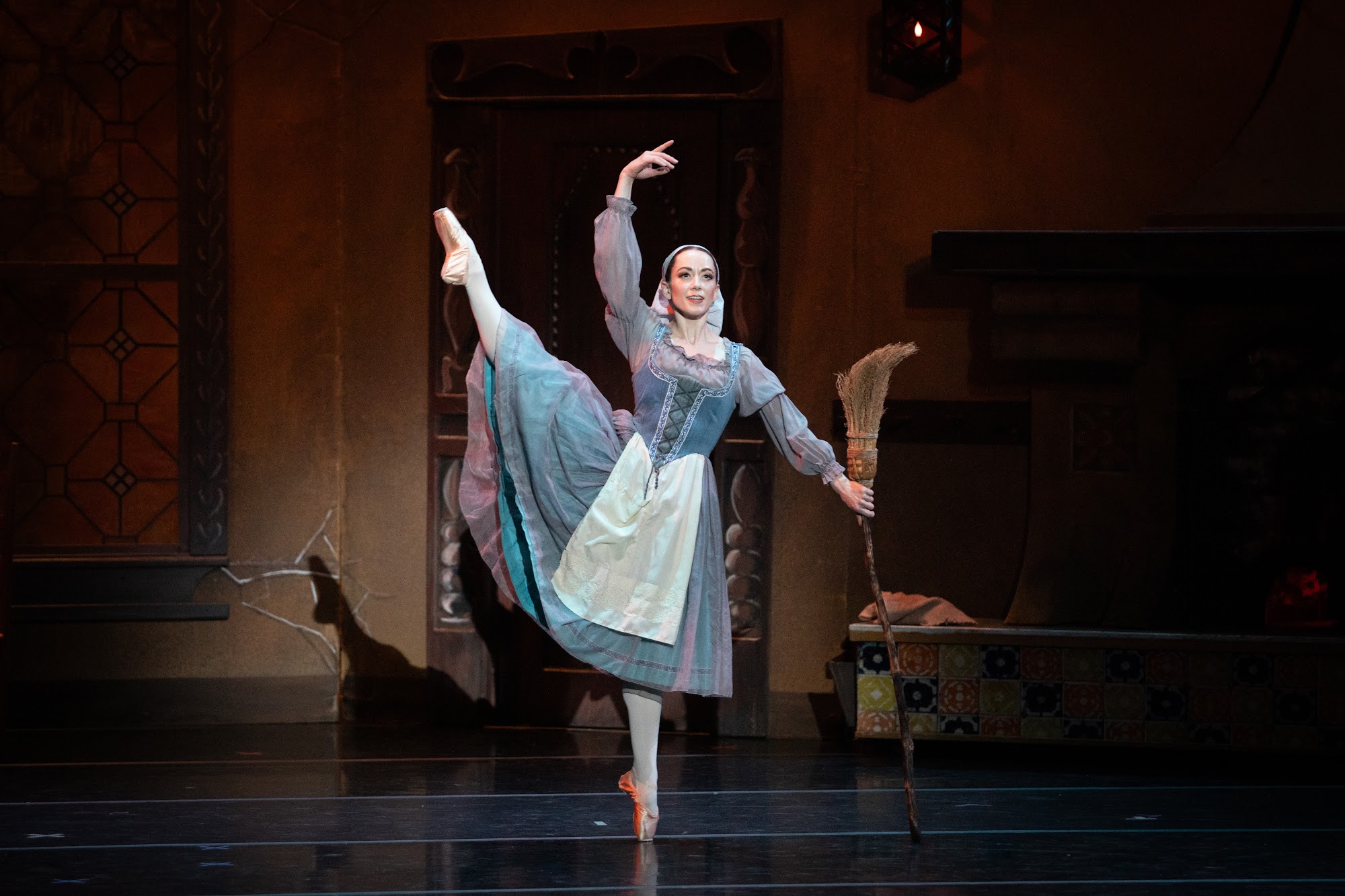
Cinderella with broom, before the transformation — Ballet Des Moines
From Ballet Des Moines' Cinderella
Grade Level
4
Time
2 Class Periods
Disciplines
Drama · Dance · Visual Art · ELA · SEL
Download Lesson Plan
The Compelling Question
When we change who's telling the story — and how they tell it — what truths come out that we couldn't hear before?
Lesson Arc · 2 Class Periods

At a glance

Three movements across two days — explore the story, see how grown-up artists fractured it, then make something of your own.

Part One · Day 1
Explore the Story
≈ 65 minutes

Move as the characters, freeze the plot in tableau, and walk in another point of view — including the stepmother's.

Part Two · Day 1 Close
How BDM Fractured It
≈ 20 minutes

Five specific choices Ballet Des Moines made — thoughtful fracturing modeled by grown-up artists before students try their own.

Part Three · Day 2
Create Your Own
≈ 75 minutes

Choose a twist, design the world, build a scene with movement and dialogue, write, and perform.

Learning Objectives

  1. 01Analyze the elements of Cinderella — character, setting, plot, and point of view — and identify what makes a fairy tale "fractured."
  2. 02Use movement, drama, and visual art to express character traits and emotional transformation.
  3. 03Practice perspective-taking by inhabiting characters whose point of view differs from the original narrator's.
  4. 04Create an original fractured fairy tale that uses dialogue, movement, visual design, and written narrative together.

Standards Aligned

Iowa Social Studies
SS.4.5 · SS.4.21 · SS.4.24
Common Core ELA
RL.4.3 · RL.4.6 · W.4.3 · SL.4.4 · L.4.5
National Core Arts · Dance
DA:Cr1.1.4 · DA:Pr4.1.4 · DA:Cn10.1.4
National Core Arts · Theater & Visual Arts
TH:Cr1.1.4 · TH:Pr5.1.4 · TH:Cn10.1.4 · VA:Cr1.1.4 · VA:Cr2.1.4
CASEL Competencies
Self-Awareness · Social Awareness · Perspective-Taking · Empathy

Materials You'll Need

  • Open floor space (push desks back for movement)
  • A traditional Cinderella picture book or short read-aloud
  • Seriously, Cinderella Is So Annoying! by Trisha Speed Shaskan (or another fractured tale)
  • Paper, pencils, crayons, or markers for sketches
  • Optional: music or a BDM Cinderella video clip

Before You Begin

  • Reserve open floor space for both class periods.
  • Source both books — the traditional and the fractured version — in advance.
  • Review Part Two (the BDM-vs-Traditional comparisons) so you can narrate the differences confidently.
  • Establish a "pause signal" so students can step out of movement work if needed.
Part One · ≈ 65 minutes · Day 1

Explore the Story

Inhabit the characters, freeze the plot, walk in another point of view.

Before students can fracture a fairy tale, they need to know what's inside it — the characters' bodies, the story's turning points, and the perspectives that the traditional telling leaves out. Part One uses movement, tableau, and acting to put students inside the familiar tale.

01Warm-Up · Emotion Walk

10 minutes · whole class

Students walk around the room. The teacher calls out a character — they shift their body to embody it. Repeat through three quick rounds:

i
Happy Cinderella
Light, springy steps · open shoulders · smiling face
ii
Tired Cinderella
Heavy steps · shoulders rolled forward · low gaze
iii
Mean Stepmother
Sharp turns · chin lifted · eyes narrowed
After Each Round

Q. How does your body show this character?

Q. What's different about how you move when the feeling changes?

02Read & Act the Story · Tableau

20 minutes · whole class

Read Cinderella aloud. At three key moments, pause and have students freeze in a tableau — a still pose that captures the moment as if it were a photograph.

  1. Tableau 1Cinderella scrubbing the floor — alone, the stepfamily watching.
  2. Tableau 2The Fairy Godmother appears — magic, surprise, the dress arriving.
  3. Tableau 3Midnight strikes — Cinderella runs, the slipper falls.
In Each Frozen Picture

Q. What do we see in this frozen picture?

Q. Whose body tells us the most about what's happening?

Q. What would the picture say if it could speak?

This is drama-based embodied learning — the same approach used by Wolf Trap's arts education programs.

03Point of View Through Acting

15 minutes · small groups

In small groups, assign each student a role. Each group acts out a short scene from their character's perspective. Encourage students to be honest, not cartoonish.

i
Cinderella
The one we usually root for — but how does she explain her own quiet?
ii
The Stepmother
The villain of the traditional tale — but what does she think she's doing, and why?
iii
The Stepsisters
Cruel in the original — but where did their cruelty come from, and what do they want?
iv
The Prince
He spends one night dancing — what does he actually see, and what does he miss?
After Each Scene

Q. Did you understand this character differently after walking in their shoes?

Q. What part of their perspective was the original story not telling us?

04Introducing Fractured Fairy Tales

10 minutes · whole class

A fractured fairy tale takes a familiar story and changes something on purpose:

  1. 01The Characters Who's wicked, who's kind, who's the hero.
  2. 02The Setting A castle becomes a space station, a kingdom becomes a school.
  3. 03The Ending The slipper fits someone else, or no one at all.
  4. 04The Narrator The story gets told from a different point of view, often with humor.

Read aloud from Seriously, Cinderella Is So Annoying! — a version told by the stepmother herself.

Identifying the Fracture

Q. What is different about this version from the one we read first?

Q. Who is telling the story, and how does that change what we believe?

Q. Where does the humor come from — and what truth does it sneak in?

05Movement · Transformation

10 minutes · individual

Cinderella changes more than her dress in this story — she changes how she moves. Students create a short movement sequence showing her transformation:

  1. 01Before the ball — small, slow, contained movements. Heavy. Close to the floor.
  2. 02After the magic — bigger, faster, more confident. Reaching up. Taking space.
  3. 03The transition — find the moment where the change happens.
Part Two · ≈ 20 minutes · Day 1 Close

How BDM Fractured It

Five specific choices, made by grown-up artists, that change what the story means.

Before students invent their own fractured versions, show them how professional artists do it. Ballet Des Moines' production of Cinderella isn't a museum reproduction of the traditional ballet — it's a careful re-imagining. Five specific choices, side by side with the tradition:

In the Tradition
Acting and choreography stay separate

The dancers perform the steps. The "story" happens between them — through mime, gestures pointing to objects, and standing-still acting.

At Ballet Des Moines
Choreography is the storytelling

The movement expresses the emotion of the character rather than miming objects. The dance and the drama are the same thing.

In the Tradition
Stepsisters as two men in drag

A long comedic convention — the stepsisters played by male dancers in over-the-top costumes, played for laughs.

At Ballet Des Moines
Minnie and Maxxie · cross-cast

Minnie is played by a female dancer. Maxxie is played by a male dancer. The comedic tension stays — but the meaning shifts.

In the Tradition
Stepfamily as character roles

The Stepmother and Stepsisters are mostly "acting" parts — broad comedy, big faces, less technical dance.

At Ballet Des Moines
Barbarra, Minnie & Maxxie · full dancers

They act up a storm, but they also have beautiful, technically challenging choreography of their own. They're complete artists in the work — not just comic relief.

In the Tradition
Stepsisters are purely wicked

Flat villains. We laugh at them, but we don't ask why they are the way they are.

At Ballet Des Moines
Maxxie · the bullied who becomes a bully

Maxxie knows what it's like to be bullied by Barbarra and Minnie. She feels empathy for Cinderella and shows her small kindnesses — but only when no one is watching, because she knows she'll be punished.

In the Tradition
The Fairy Godmother appears briefly

She arrives, delivers the magic, sends Cinderella to the ball, and disappears. A plot device more than a character.

At Ballet Des Moines
Fairy Godmother · magical chaperone

She accompanies Cinderella to the ball, guiding her through the event and creating an air of mystery that mesmerizes the entire court.

Discussion · After the Comparison

Q. Which of these changes surprised you? Which felt right?

Q. What did the artists at BDM keep? What did they change?

Q. Who do you feel for differently in their version — and what choice made that happen?

Q. If you could fracture any part of a story you love, what part would it be?

Part Three · ≈ 75 minutes · Day 2

Create Your Own

Brainstorm the twist, sketch the world, build a scene, write, perform.

Now students put it all together. They've explored the original, watched professionals fracture it, and walked in unfamiliar shoes. Day Two is the day they make something of their own.

06Brainstorm Your Fracture

10 minutes · individual

Students pick one twist to start with:

  1. 01A New Setting Space, school, the bottom of the ocean, an apartment building, a jungle.
  2. 02A New Personality What if Cinderella loved chaos, or the stepmother was secretly afraid?
  3. 03A New Ending What if the slipper didn't fit anyone? What if Cinderella decided not to go back?
  4. 04A New Narrator The mouse, the slipper, the Fairy Godmother on her day off.

07Visual Art · Design Your Story

15–20 minutes · individual

Each student draws one of the following — a character sketch of their reimagined main character, or a setting drawing of where the story takes place. Around the drawing, students label: three character traits, three differences from the original, and one detail no one else has thought of.

This aligns with arts-integration strategies championed by The Kennedy Center.

08Drama & Movement · Build a Scene

20–25 minutes · small groups

In groups of 3–4, students create a short fractured scene that includes both acting (dialogue or narration) and movement (gesture, dance, or tableau). Clear beginning, middle, end. Encourage expressive use of body and voice — and remind groups of Part Two: the movement isn't decoration; it should help tell the story.

09Writing Connection

15–20 minutes · individual

Students write a short version of their fractured story — one paragraph to one page. Two questions guide the writing:

Two Questions to Answer in Writing

Q. What changed from the original story — and why?

Q. Who is telling this version, and how do we know?

10Performance & Reflection

15–20 minutes · whole class

Groups perform their scenes for the class. After each performance, the audience discusses:

Audience Discussion · After Each Performance

Q. What was different from the original story?

Q. What artistic choice helped tell the story — a gesture, a line, a moment of stillness?

Q. Did this fracture make you feel for a character you didn't before?

Closing Reflection
What did changing the story let you see — about your characters, or about yourself?

Close the unit with a single reflection question students can write or speak. Honor the time it takes — the best answers come slowly. Some students will write a page; some will say one true sentence. Both count.

For Teachers

Teacher Toolkit

Assessment, differentiation, notes, and resources.

Assessment

Performance-Based
  • Use of body, voice, and face to communicate character in the Emotion Walk and tableaux
  • Active participation in drama work and small-group scene building
  • Cooperative engagement in the group performance
Academic
  • Understanding of fractured fairy tale elements (character, setting, ending, narrator)
  • Written story that clearly identifies what changed and who is telling it
  • Reflection responses connecting artistic choices to story meaning

Differentiation

Support
  • Offer specific movement prompts ("show angry," "show excited," "show invisible")
  • Provide sentence starters: "In my version, ___ is told by ___, because ___"
  • Pair students new to drama work with a peer buddy for small-group scenes
  • Allow students to stay seated and dance with hands and face if standing is too exposing
Extension
  • Add music or rhythm to the movement sequences
  • Create longer scripted performances with multiple scenes
  • Combine two students' fractures into a single hybrid story
  • Write a second version from a different character's perspective

Notes for Teachers

  • The Stepmother-perspective scene in Activity 03 is the unit's empathy hinge. Don't rush it — let students sit with the discomfort of speaking as a "villain."
  • Part Two (the BDM comparison) models thoughtful fracturing before students try their own — so they're not just inverting the original for laughs.
  • Lean into Maxxie's arc when discussing the comparison — it's the most emotionally accessible of the five choices and opens the bullied-becomes-bully conversation honestly.
  • For fourth graders, "fractured" works better when framed as a choice rather than a destruction. Artists fracture stories on purpose, to find new truths.

Resources

  • Watch
    Ballet Des Moines' Cinderella
    →
  • Read
    Seriously, Cinderella Is So Annoying! · Trisha Speed Shaskan
    →
  • Method
    The Kennedy Center · Arts Integration Resources
    →
  • Method
    Wolf Trap · Drama-Based Embodied Learning
    →
  • Explore
    More fractured fairy tales — a teacher-vetted booklist
    →

Take this lesson into your classroom

The complete lesson plan — including a traditional-vs-fractured comparison handout and student-facing prompts.

Download Lesson Plan (PDF)
0
Skip to Content
Ballet Des Moines
Performances
Company
Support
Training
Education
Calendar
Merch
Ballet Des Moines
Performances
Company
Support
Training
Education
Calendar
Merch
Performances
Company
Support
Training
Education
Calendar
Merch

Lauridsen Campus for Arts & Education
655 Walnut Street, Suite 120
Des Moines, IA 50309

Donate

Calendar

Events

Performances

Contact Us

Audition

No results found
 

© 2025 Ballet Des Moines. All Rights Reserved.